
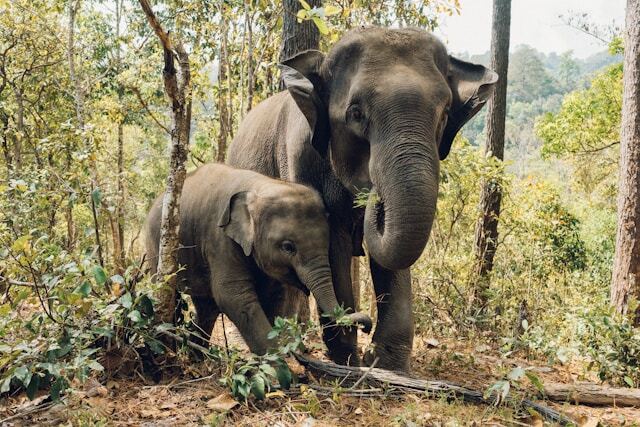
The elephant became a national symbol of Thailand because of its long-standing importance in Thai religion, royalty, warfare, work and culture. White elephants, in particular, became associated with Buddhism, good fortune and the Thai monarchy.
Today, elephants remain one of the most recognisable symbols of Thailand, appearing in art, architecture, souvenirs and cultural traditions. They also represent an important conservation story, as Asian elephants are an endangered species.
Why is the elephant a symbol of Thailand?
Elephants have been part of Thai society for centuries. Their strength made them valuable for transportation, logging and warfare, while their connection to Buddhism and royalty gave them special cultural significance.
The white elephant is particularly important in Thai culture. According to Buddhist tradition, Queen Maya, the mother of Buddha, dreamed of a white elephant carrying a lotus flower before his birth. This helped establish the white elephant as a symbol of spirituality and good fortune.
White elephants were also traditionally associated with Thai kings. Receiving or possessing a white elephant was considered a sign of royal prestige and authority.
The elephant became so closely connected with Thailand's identity that it appeared on the country's national flag in the early 20th century. Although Thailand's flag no longer features an elephant, the animal remains an enduring national symbol.
%20(12).jpg?width=500&height=500&name=gradient%20photos%20(500%20x%20500%20px)%20(12).jpg)
What role did elephants play in Thai history?
Elephants were more than a cultural symbol. They played an important practical role in Thailand for hundreds of years.
Warfare
From around the 15th century, elephants were used in warfare across Southeast Asia. Their size and strength made them powerful military animals capable of carrying soldiers and equipment.
Transport and work
Elephants were also used to transport people and goods, particularly through difficult terrain. They later became an important part of Thailand's logging industry, helping to move heavy timber through forests.
However, extensive logging contributed to significant deforestation and the loss of elephant habitat. Thailand banned commercial logging in 1989, but habitat loss remains a challenge for wild elephants.
Are elephants endangered in Thailand?
Yes. Asian elephants are classified as Endangered, and Thailand's wild elephant populations face threats including habitat loss, human-elephant conflict and poaching.
Thailand has both wild and captive elephants. Following the 1989 logging ban, many captive elephants moved into the tourism industry, contributing to the growth of elephant rides, shows and other attractions.
This has made ethical elephant tourism increasingly important. Visitors can help by choosing experiences that prioritise elephant welfare and allow animals to behave naturally, rather than attractions involving riding, performances or unnecessary handling.
Why are elephants important to Thailand's environment?
Elephants are important not only because of their cultural significance but also because they help maintain healthy ecosystems.
As elephants travel and feed, they:
- Disperse seeds, helping plants regenerate and spread.
- Fertilize soil through nutrient-rich dung.
- Support other species, including insects and animals that depend on elephant-created resources.
- Create water sources by digging for underground water.
- Shape habitats by breaking vegetation and creating clearings.
This means that conserving elephants can also help protect the wider ecosystems and biodiversity of Thailand.
What does the elephant represent in Thailand?
The elephant represents several important values in Thai culture, including:
- Strength – because of its immense physical power.
- Wisdom – reflecting its intelligence and cultural significance.
- Good fortune – particularly through the symbolism of the white elephant.
- Royal authority – because of its historic association with Thai kings.
- Thai heritage – reflecting the animal's centuries-long role in the country's history.
Experience Thailand with The Intern Group
The story of the elephant offers a fascinating insight into Thailand's history, culture and relationship with the natural environment.
If you want to experience Thailand beyond a short holiday, our Thailand internship program gives you the opportunity to live and work in the country while gaining practical international experience.
You can develop career skills, build a global network and experience Thai culture with internship opportunities across fields including business, marketing, NGOs and non-profits, hospitality and environmental work.
An international internship lets you experience the country from a different perspective, not just as a visitor, but as someone living and working in Thailand.